 Ask Anything : 08045802133
 Send Inquiry



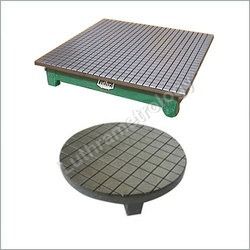
Cast Iron Lapping Plates
2000 INR/Piece
Product Details:
- Material Cast Iron
- Processing Type Machined
- Condition New
- Technology Lapping
- Dimension (L*W*H) 300mm x 300mm x 50mm
- Power Mode Manual
- Application Precise flatness surface finishing, laboratory, tool rooms, gauge manufacturing
- Click to View more
X
Cast Iron Lapping Plates Price And Quantity
- 2000 INR/Piece
- 01 , , Piece
Cast Iron Lapping Plates Product Specifications
- New
- Approx. 20 kg
- Precise flatness surface finishing, laboratory, tool rooms, gauge manufacturing
- Uncoated
- Lapping
- Cast Iron
- Manual
- Machined
- 300mm x 300mm x 50mm
Cast Iron Lapping Plates Trade Information
- 80 , , Piece Per Day
- 1-4 Week
Product Description
Cast Iron Lapping Plates
Known for our sincere dedication and customer-specific approach, we have been instrumental in manufacturing, supplying and exporting a broad range of Cast Iron Lapping Plates. These cast iron made plates are made available in circular & rectangular shapes, each having different diameters, widths and thicknesses. Offered plates are useful in different lapping machines. Our clients can procure these plates in bulk quantity following their demands and requirements. Some of the salient features of these Cast Iron Lapping Plates are mentioned below:
- Smooth surface
- High accuracy & precision readout
- Excellent mechanical strength
- Low surface tension
Other info:
Cast Iron Lapping Plates
We provide our clients with qualitative cast iron lapping plates that are used for accurate hand lapping of various materials like nylon, plastics, ceramics and other non ferrous material. These are available in Round and rectangular sizes and have 3 mm wide and 3 mm deep serrations on working surface equally spaced at 25 mm. Our cast iron plates are manufactured using closed grain graded casting as per IS 210:1993 confirming to Grade FG- 220. Cast iron lapping plates are supplied with calibration certificate traceable to National Physical Laboratory (NPL, Govt of India) New Delhi. We offer our range of lapping plates for various lapping machine of different sizes as per the specification of our clients.
Standard Size and accuracy of Luthra Cast Iron Lapping Plates as per IS : 2285:2003, Grade 1
| ound / Square mm | Accuracy um | Sizes mm | Accuracy um |
| 100 | 5 | 300 x 450 | 9 |
| 200 | 5 | 450 x 600 | 10 |
| 250 | 7 | 600 x 900 | 12 |
| 300 | 7.5 | 1000 x 1000 | 14 |
| 400 | 9 | ||
| 450 | 9 |
Superior Machined Cast Iron Build
Our lapping plates are crafted from carefully selected cast iron using advanced machining technology. Each plate undergoes precision processing to deliver consistent flatness and durability, essential for demanding finishing tasks in professional environments.
Manual Power for Maximum Control
Designed to be operated manually, these lapping plates allow users to finely tune the surface finishing process. This enables precise control over pressure and technique, ensuring exceptional results in polishing and calibration tasks.
Versatile Application Across Industries
These lapping plates find critical use in laboratories, tool rooms, and gauge manufacturing. Their robust construction and accuracy make them suitable for various settings, supporting industries that demand exacting standards of flatness and surface quality.
FAQs of Cast Iron Lapping Plates:
Q: How should I use cast iron lapping plates for precise surface finishing?
A: For optimal results, apply the abrasive compound evenly across the plate and use controlled manual strokes with the workpiece, maintaining consistent pressure to achieve superior flatness.Q: What makes this cast iron lapping plate suitable for laboratory and tool room applications?
A: The plates machined surface, new condition, and robust dimensions ensure reliable flatness and accuracy, which are vital for laboratory calibration, tool room maintenance, and gauge manufacturing.Q: Where can I purchase cast iron lapping plates in India?
A: You can acquire these lapping plates from authorized distributors, exporters, manufacturers, and suppliers throughout India, ensuring local availability and genuine product quality.Q: When should I choose a 300mm x 300mm x 50mm cast iron lapping plate over other sizes?
A: Select this size when working with medium-sized components that require precise flatness, as the plates dimensions accommodate various industrial and laboratory needs efficiently.Q: What is the process involved in using a manual lapping plate?
A: The process includes applying a suitable abrasive, placing the workpiece on the plate, and moving it in patterned strokes to evenly abrade the surface, resulting in high-precision flatness.Q: What are the benefits of using an uncoated cast iron lapping plate?
A: An uncoated plate ensures direct contact between the abrasive and the cast iron surface, promoting effective material removal and achieving precise finishing without interference from coating layers.Tell us about your requirement

Price:
Quantity
Select Unit
- 50
- 100
- 200
- 250
- 500
- 1000+
Additional detail
Mobile number
Email

Other Products in 'Lapping Plates' category

LUTHRA PRECISION INSTRUMENTS PVT LTD.
GST : 06AABCL7552Q1ZY
GST : 06AABCL7552Q1ZY

- Plot No:25-26, HSIIDC Industrial Estate, Double Storey, Sonipat - 131001, Haryana, India
- Phone : 08045802133

- Mr A. C Luthra (General Manager)
- Mobile : 08045802133
- Send Inquiry
-


 Send Inquiry
 Send SMS
 Call Me Free
LUTHRA PRECISION INSTRUMENTS PVT. LTD.
All Rights Reserved.(Terms of Use)
Developed and Managed by Infocom Network Private Limited.
Developed and Managed by Infocom Network Private Limited.

